The story
Why this place, why now
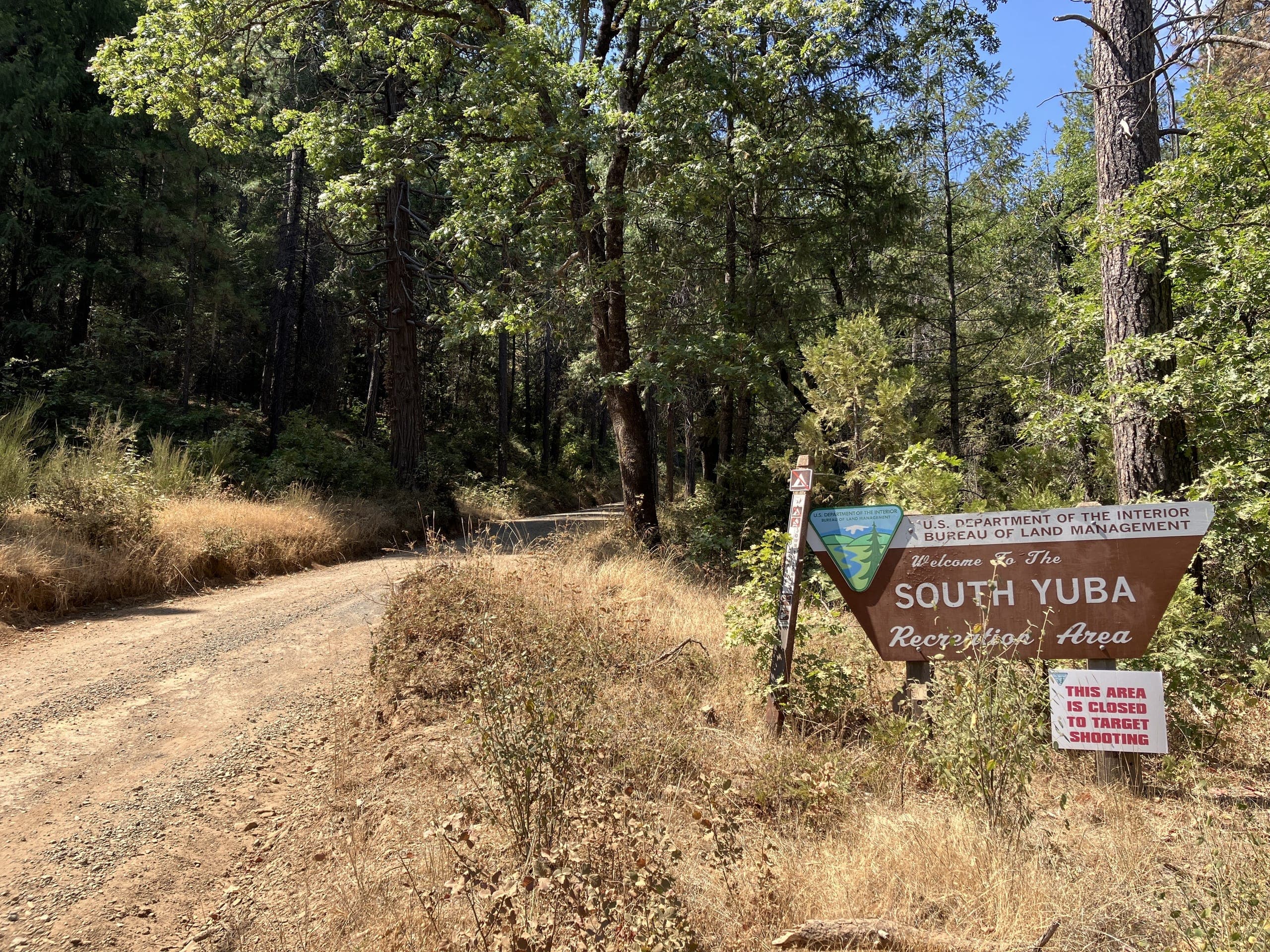
Round Mountain is a prominent ridge above the South Yuba River canyon, three miles north of Nevada City. It carries an old, historically maintained community fuel break along its ridgetop — the kind of feature that, if kept clean, can keep a fire moving up-canyon from cresting into the watershed beyond. The ~1,194-acre project area is mostly BLM-managed public land (about 1,032 acres), with roughly 162 acres of adjacent private land protected by Bear Yuba Land Trust conservation easements.
Years of planning, cultural and biological surveys, and SNC Prop 68-funded environmental compliance set the stage. In March 2026, the Sierra Nevada Conservancy awarded YWI a $1.12M grant to begin Phase 1 — establishing a 400-foot-wide shaded fuel break system along the ridgetop.
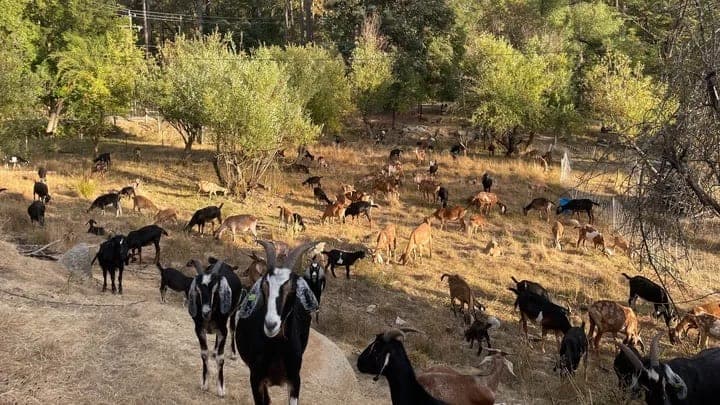
On-the-ground treatment work begins fall 2026. In parallel, a herd of 200+ goats — managed by First Rain Land Stewardship Services in partnership with YWI and BLM — is already maintaining the existing fuel break at the Round Mountain Recreation Area through low-impact seasonal grazing.
The ridge is also rich wildlife habitat. California spotted owls nest here, the threatened California red-legged frog lives just to the east, and in 2024 an acoustic-monitoring study confirmed the state-endangered great gray owl calling at Round Mountain during the spring breeding season. The treatment design works around these species — timing operations by season and keeping the large trees, snags, and dense canopy pockets they depend on.